Why cellular monitoring won the category
Ten years ago, boat monitoring was dominated by Wi-Fi-based systems that relied on your marina's flaky dockside network, or by amateur-radio-adjacent installs that required a ham license. Today, LTE-M and 5G NB-IoT make cellular connections cheap, power-efficient, and reliable enough that a single dedicated cellular modem on the boat talks to the vendor's cloud for pennies per month. Every serious consumer product in this category is now cellular-first. (For the broader context on cellular vs Starlink vs Iridium, see our marine internet stack primer.)
This matters because it's shaped what "good" looks like. You are no longer buying a monitoring device — you are buying a platform. The hardware is usually fine. What distinguishes products now is the app, the alert logic, the sensor catalog, the integration with your boat's existing electronics, and — most importantly — the vendor's staying power, because if the vendor folds, your $1,000 hub becomes a paperweight the day the cloud goes dark.
What actually matters in a monitor
After a lot of time reading forum threads and staring at product spec sheets, here's what we weigh when we pick:
1. Three-year total cost
Hardware price is the number vendors market. The number that matters is hardware plus three years of service. For a Siren 3 that's $300 + ($225 × 3) = $975. For an ArmIt BilgeMAX One kit on its cheapest plan it's $229.99 + ($100 × 3) ≈ $530. These aren't close, but neither product is "better" — they're different tools. We use three years because that's roughly the break-even horizon where the service-fee math starts to matter more than the sticker price.
2. Integration with what's already on the boat
If you already have NMEA 2000 (see our NMEA 2000 gateway guide), a system that talks to it natively (Siren 3 and 3 Pro, Yacht Sentinel YS Pro) is dramatically more useful than one that doesn't — because it sees engine data, tank levels, and battery voltage without extra sensors. If you have a sailboat with nothing but a bilge pump and two batteries, integration is irrelevant and a standalone battery-powered sensor is lighter and cheaper.
3. Sensor ecosystem depth
You will want more sensors after the first month. The question is: does the vendor sell them? Siren's first-party catalog covers battery, bilge-pump activity, entry/hatch, high water and temperature, plus wired switches and a shore-power sensor, and it all works with one hub. Yacht Sentinel's accessory range is similarly broad; most others are narrower. This matters more than it sounds, because installing second- and third-party sensors into a primary vendor's system rarely works as well as advertised.
4. App quality and notification reliability
The alert arriving five seconds after your bilge pump kicks on is a very different product from the alert arriving forty-five minutes later. Forum consensus on notification speed is remarkably consistent: Siren and Yacht Sentinel are reliable; smaller vendors are inconsistent; the cheapest systems are effectively broken on this axis. You will not know this from the marketing.
5. Vendor durability
The most underrated criterion. You are buying a product whose usefulness depends on a cloud service that must keep running for ten years. Siren's acquisition by Yamaha in 2021 is the single most important fact in this category — it means Siren is backed by a Fortune 500 marine company with a century of industry presence. Yamaha ships Siren 3 factory-installed on its own boats now. That's durability you can't get from a smaller independent.
Our top pick: Siren 3 Pro
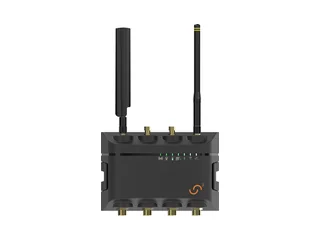
Siren 3 Pro
Strengths
- Deepest NMEA 2000 integration in the consumer segment
- Built-in NMEA 2000 plus more wired inputs and outputs than the Siren 3, and digital-switching integration
- Best app in the category — clean, fast, reliable notifications
- Broad sensor catalog — wireless battery, bilge, entry/hatch, high-water and temperature sensors, plus wired switches
- Yamaha corporate backing means long-term vendor durability
- Global LTE-M works in both North America and Europe
Trade-offs
- $800 hardware is a high upfront cost vs. the $300 Siren 3
- Professional installation is strongly recommended — you're tapping the NMEA 2000 backbone
- $225/yr subscription compounds over time — 10 years = $2,250 in service fees
- No Signal K export or raw-data API — if you want to own your data, this isn't the system
- Hub needs 12V DC, always on — Siren quotes under 20mA asleep and 70mA while actively tracking
The Siren 3 Pro is the clearest top pick we've written about in this category. It's not the cheapest and it's not the most innovative, but it's the system most likely to still be reliably doing its job on a random Tuesday in 2034 — and that matters more than any individual feature.
The Pro's advantage is depth of integration. Both Siren main devices have NMEA 2000 built in, so on a boat with a backbone they can read data your existing electronics already put on the network — engine data, battery voltage, tank levels — without adding a sensor for each. The Pro adds more wired inputs and outputs (seven digital inputs, four analog, three outputs), digital-switching integration, and readiness for SirenSat, Siren's Globalstar satellite add-on for position tracking outside cellular range. For a larger boat with real engines and a busy backbone, that's what you pay the extra money for.
"For a boat that already has NMEA 2000, you get much of your monitoring from data already on the backbone. The Pro is for boats that want more wired inputs, digital switching and a satellite option on top."
The app is the other quiet advantage. Forum consensus is remarkably consistent: Siren's app is noticeably better than ArmIt's, visibly more polished than Yacht Sentinel's, and an order of magnitude better than any of the dozen cheaper entrants. Notifications arrive fast. The dashboard is readable. The history view is actually useful. None of these are revolutionary features — they're just done right, consistently, across firmware updates.
Budget pick: Siren 3 (the standard model)
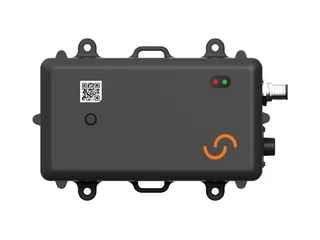
Siren 3 (Main Device)
Strengths
- Same app, same reliability, same vendor as the Pro
- $300 hardware is competitive with most of the segment's budget options
- Seasonal plan ($150 Apr–Oct) is genuinely useful for Northeast/Great Lakes boats that lay up
- DIY-installable in 2–3 hours — no professional required
- Works with the full Siren wireless sensor ecosystem
Trade-offs
- Fewer wired inputs and outputs than the Pro, and no digital-switching integration
- Supports up to six wireless sensors (plus one wired security sensor)
- Same $225/yr subscription as the Pro — you only save on hardware
If your boat is under about 35 feet and doesn't have a sophisticated NMEA 2000 network — most trailer-sailors, many cruiser-racers, any runabout or center-console — the standard Siren 3 gets you 80% of the Pro's value at 40% of the hardware cost. Same app. Same reliability. Same Yamaha corporate backing. It still has built-in NMEA 2000 and Yamaha Command Link connectivity (the NMEA 2000 cable kit is $38.47 extra); what you give up is the Pro's extra wired inputs and outputs, digital-switching integration and SirenSat satellite option.
The seasonal plan — $150 for April through October — is a genuinely good deal for anyone who winterizes the boat. Over five years, you'd pay $750 in service instead of $1,125. That's real money.
No-hub pick: ArmIt BilgeMAX One
ArmIt BilgeMAX One
Strengths
- No hub, no pairing, no wiring to boat power
- Multi-year internal battery, so it works on boats with no shore power
- Cheapest three-year cost here for bilge-only monitoring
- Plans are per boat: up to three MAX devices on the $150/yr Guardian plan, unlimited on the $275/yr Command plan
- Ideal for mooring-field boats, trailer-sailors, dinghies
Trade-offs
- Not cellular — it only works where ArmIt's private network reaches, so check coverage for your slip or mooring first
- No NMEA 2000 integration — sensors are fully standalone
- BilgeMAX One uses a float, so placement matters on a boat that heels or rolls
- App is the weakest of the major vendors
- Smaller vendor — less durable than Yamaha-backed Siren
ArmIt is a fundamentally different architecture. Where Siren installs a cellular hub in your cabin and wireless sensors report to it, ArmIt has no hub at all: each battery-powered MAX device talks directly to ArmIt's own EarthSmart Maritime Network. That network is private, not a cellular carrier, and it covers specific marinas and waterways rather than whole regions, so strictly speaking ArmIt isn't a cellular monitor. We keep it here because it's the alternative most buyers weigh against Siren. Check ArmIt's coverage for your slip or mooring first. If it's covered, the install is wire-free: place the BilgeMAX float where it will catch rising water, mount the sensor module high and dry, activate it, and you're done.
For bilge-only monitoring, ArmIt wins on cost: about $530 over three years for the $229.99 BilgeMAX One kit on the $100/yr Sentinel plan, against about $1,114 for a Siren 3 plus its $139.09 wireless high-water sensor. ArmIt's plans are per boat rather than per sensor, so adding a battery or motion device moves you to the $150/yr Guardian plan (up to three devices) rather than a second plan, but the catalog is thinner and nothing talks to NMEA 2000. This is the right way to think about ArmIt — it's a point solution, not a platform. If you want to monitor one thing (bilge, usually), it's the right tool. If you want to monitor everything, buy Siren.
Also considered
Yacht Sentinel YS Pro
Paris-based pioneer in the category; the YS Pro replaced the discontinued Yacht Sentinel 6. It costs €1,590 excluding VAT plus €20 a month in its EU and US zones, has an embedded 3G/4G SIM with published coverage in more than 100 countries, and reads NMEA 2000, J1939, CAN and Modbus data built in. It can also use your own SIM, Wi-Fi or Ethernet (such as Starlink). There is no satellite option. The right pick if you cruise between countries, especially in Europe. Less relevant for US-only domestic use, where Siren is cheaper.
Garmin OnDeck
Real product, well-made. Tightly integrated with Garmin's chartplotter ecosystem — alerts show up on the helm MFD as well as the phone. The right pick only if your helm is already Garmin. If you're buying OnDeck to pair with a Raymarine or Simrad plotter, you're fighting the product's main advantage.
Nautic Alert Insight X2
Expensive, serious, Iridium-first. Aimed at commercial operators, bluewater cruisers, and owners of high-value boats in remote cruising grounds. The 3-year total runs about $2,700, which puts it in a different category than the consumer picks above.
BRNKL
Camera-first boat monitor — the selling feature is actual photo alerts when someone boards your boat. Real product, niche use case. If security is your primary concern (vs. flooding, battery drain, etc.), BRNKL is worth a look.
Boat Command
Real product with a distinctive angle: predictive maintenance from engine-data analysis. Smaller vendor, more expensive than Siren, narrower use case. Skippable unless predictive maintenance is specifically what you want.
What we'd skip
Any no-name GSM alarm from Amazon for under $100
Consistent forum pattern: cheap 3G-only units, buggy firmware, dead-SIM headaches, frequent false alarms. Save the $80 for something that works.
Wi-Fi-only boat monitors
They depend on your marina's Wi-Fi, which is usually weaker and less reliable than cellular. If the power goes out at the marina — which is exactly when you want to know about it — the monitor goes offline with it. Cellular has largely obsoleted this category.
Boat Fix legacy hardware
Multiple product generations, some no longer supported. Discount listings from dealers may be discontinued SKUs. If you're buying Boat Fix, verify the specific model is currently supported before paying.
When we'd update this pick
We'll revisit this guide when:
- A mainstream vendor ships a Signal K export or raw-data API — the single biggest systemic weakness in the category
- Siren's subscription drops substantially (a 30% cut would reshuffle the cost comparisons)
- ArmIt's EarthSmart network grows to the point that coverage stops being the first question
- A new entrant offers subscription-free cellular monitoring at competitive hardware prices — a clear gap in the market
- Starlink Mini adoption on cruising boats makes cloud-independent monitoring substantially easier
Frequently asked questions
What is the best cellular boat monitoring system in 2026?
The Siren 3 Pro is our top pick for any connected boat with NMEA 2000. It has the deepest NMEA 2000 integration in the consumer segment, the best app in the category, and Yamaha corporate backing. For boats without complex NMEA 2000 needs, the standard Siren 3 gets 80% of the value at 40% of the hardware cost.
Is there a cellular boat monitor that doesn't require a subscription?
No. Every cellular boat monitor needs a service plan because the device carries its own SIM and data connection — Siren's is $225 a year, or $150 for an April–October season. ArmIt, the usual budget alternative, isn't cellular (it runs on its own private EarthSmart network) but still has a plan, from $100 a year per boat. Truly subscription-free monitoring means a system like Glomex ZigBoat, or Signal K on your own Starlink or marina Wi-Fi.
How much does Siren Marine cost per year?
Siren Marine's standard subscription is $22 per month or $225 per year for the Siren 3 and Siren 3 Pro hubs, covering cellular connectivity and the full app feature set. A seasonal plan covering April through October is available for $150, which is a meaningful discount for boats that lay up over winter.
Does Siren 3 Pro work with NMEA 2000?
Yes — the Siren 3 Pro has the deepest NMEA 2000 integration in the consumer segment. Once connected to your boat's NMEA 2000 backbone, it reads engine RPM, coolant temperature, fuel level, oil pressure, battery voltage, tank senders, wind, speed, and depth, and Siren says it tracks engine performance. You can set alerts on any of it.
Cellular vs satellite boat monitoring — which should I choose?
For domestic US, coastal European, and most marina-bound boats, cellular (LTE-M, 5G NB-IoT) is the right answer — it's cheaper, lower-power, and reliable in port. If you cruise internationally, Yacht Sentinel's YS Pro has published cellular coverage in more than 100 countries. For offshore passages beyond cellular range, look at an Iridium-based system like Nautic Alert Insight X2 (Siren's SirenSat add-on for the Siren 3 Pro uses Globalstar, but for position tracking rather than sensor alerts). Cellular-only is fine for the vast majority of consumer boats.
The short version
Most buyers: Siren 3 at $975 over three years. Same app, same vendor, lower upfront cost than the Pro. If you want more wired inputs, digital switching or the SirenSat option on a larger NMEA 2000 boat, upgrade to the Siren 3 Pro at $1,475. If your boat is on a mooring and all you need is bilge alerting, buy an ArmIt BilgeMAX One (about $530 over three years), provided ArmIt's network covers your mooring, and skip the platform entirely.